

AI translation is fast, inexpensive and, more and more often, impressively good. If you need to understand a Spanish contract or produce a first draft, it is a real help. But once a document has to do something legally (be signed, filed with a public authority or submitted in court), the question changes: is an AI translation legally valid?
The short answer is that it depends on what you need it for. A machine translation can be perfectly adequate for internal use, but it is not a sworn translation and will not be accepted as one where a sworn translation is required. This article explains the difference, which documents typically need a sworn translation in Spain, and who is responsible when a translation gets something wrong.
Please note: this article provides general information and is not legal advice. For a specific situation, consult a lawyer or the authority you are submitting the document to. It focuses on Spain; other countries have their own systems.
Three kinds of translation, three levels of assurance
When people ask whether AI translation is legally valid, they are often mixing up three quite different things:
| Type | Produced by | What it guarantees | Typical use |
|---|---|---|---|
| Informal translation | An AI tool or anyone else, without professional review | Nothing in particular: nobody vouches for its accuracy | Understanding content, internal use, early drafts |
| Professionally revised translation | A professional translator, checked by a second linguist (as set out in ISO 17100) | Quality and accuracy, backed by a provider accountable under the agreed terms | Contracts, corporate documents, websites, client communications |
| Sworn translation | A sworn translator appointed by the Spanish Ministry of Foreign Affairs | Official standing: the translator certifies, with signature and seal, that it is faithful and complete | Official procedures before Spanish authorities, registries, courts and other bodies that require it |
Machine translation can play a part in producing the second and third types, but on its own it belongs firmly in the first.
What a sworn translation means in Spain
In Spain, a sworn translation (traducción jurada) is signed by a sworn translator-interpreter appointed by the Ministry of Foreign Affairs, European Union and Cooperation once they have demonstrated their qualifications. The Ministry publishes the official list of sworn translators, so any authority can check an appointment.
What gives the translation its official standing is not the quality of the wording as such, but the certification. The sworn translator declares, with signature and seal, that the translation is faithful and complete, and is personally answerable for that statement. It can be issued on paper or electronically with a digital signature, depending on what the recipient accepts.
If you are used to the UK or US, note that a Spanish sworn translation is not the same thing as a "certified translation" accompanied by a translator's statement, nor a notarised translation. Each country decides what it accepts, so always check with the receiving authority.
An AI translation is not a sworn translation
However good it is, a translation produced by an AI tool carries no sworn translator's certification, so it is not accepted as a sworn translation for official procedures. A translation engine holds no appointment and signs nothing, and nobody stands behind its output except the person who chooses to use it.
That does not mean AI has no place when dealing with official documents. It can help you understand a document before you commission a translation, or prepare internal drafts. What it cannot do is replace the sworn translator's certification.
Documents that typically need a sworn translation
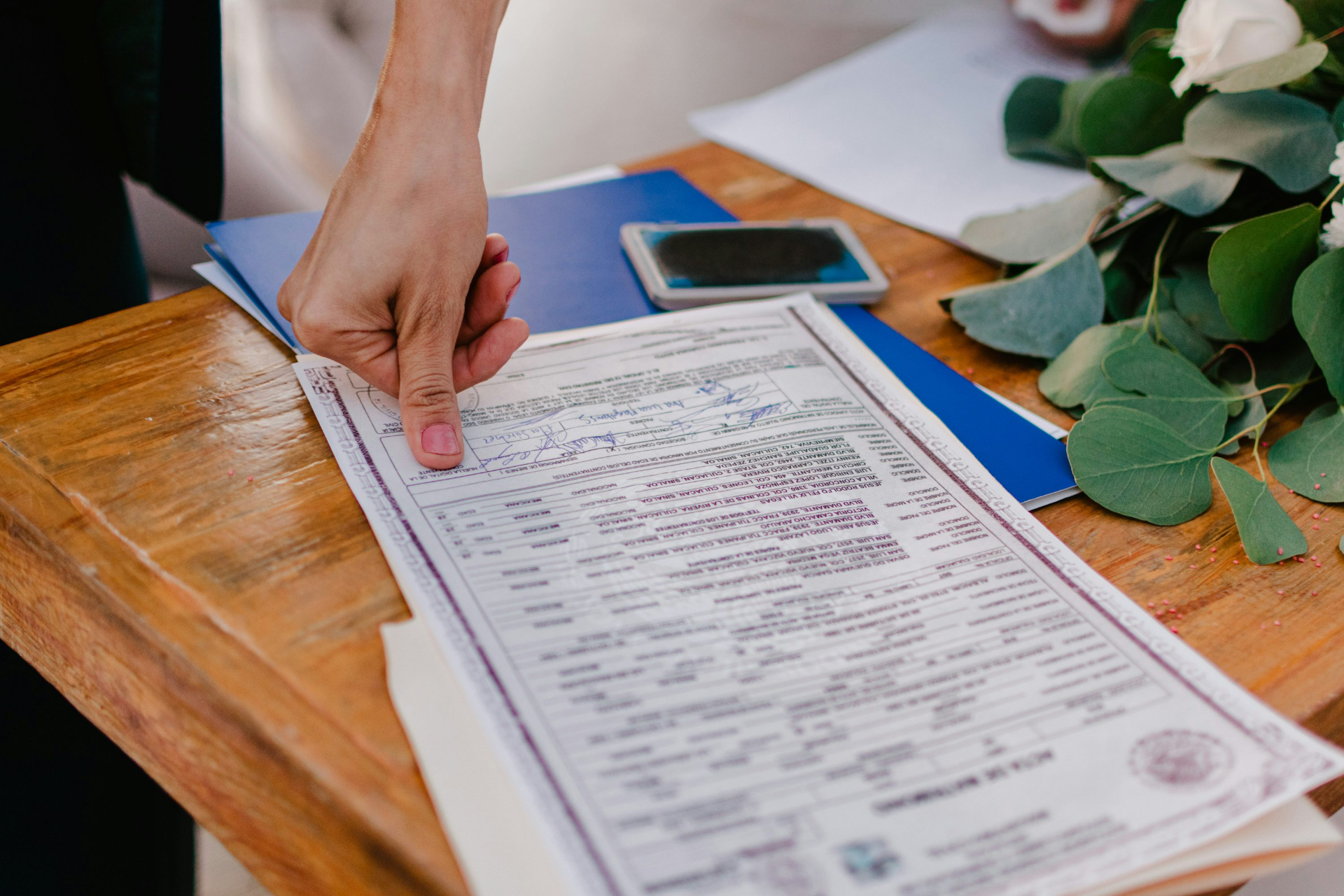
Each authority sets its own requirements, but in Spain a sworn translation is commonly requested for:
- Civil registry certificates (birth, marriage, death) for immigration, nationality or registration procedures.
- Criminal record certificates.
- Degree certificates and academic transcripts for recognition of qualifications.
- Powers of attorney, deeds and company documents to be used before a notary or filed with a registry.
- Public tender documentation, where the tender specifications require it.
- Documents submitted in court proceedings, depending on what the case requires.
Before ordering the translation, always confirm exactly what the authority wants. Bear in mind too that an apostille or legalisation is a separate step that applies to the original document, not to the translation.
Contracts: the language clause decides which version prevails
Contracts between private parties do not usually require a sworn translation. The key question is a different one: if there are two language versions, which one governs? The answer normally lies in the language clause.
Illustrative example of a language clause:
«This Agreement is executed in English and Spanish. In the event of any discrepancy between the two versions, the English version shall prevail».
With a clause like this, an error in the Spanish version carries less weight than the English text. Without one, both versions may be treated as equally authentic, and any difference becomes a matter of interpretation, which is exactly what a contract is meant to avoid. If you are signing a bilingual contract translated with AI, review the prevailing version with particular care and make sure the other one says the same. Our article on common DeepL and ChatGPT mistakes in contracts shows what to look for.
What about an unsigned translation shared "for information purposes only"? It is normally not part of the contract, but if your team makes decisions based on it, its errors can still prove costly.
Who is responsible for translation errors?
The tool does not sign anything. If you publish, sign or file a translated document, you (or your organisation) are responsible for its content, just as if you had drafted it. Whether the translation came from AI, a bilingual colleague or an outside supplier, the person using the text is the one answerable to third parties.
What does differ is the backing you have. With a professional translation, the provider is accountable for its work under the terms agreed. With a sworn translation, the sworn translator answers for the accuracy of what they certify. With unreviewed machine translation, there is no such backing at all.
The EU Artificial Intelligence Act (Regulation (EU) 2024/1689) points the same way: since 2 February 2025, Article 4 has required organisations that use AI systems to take measures to ensure their staff have a sufficient level of AI literacy. Using AI with good judgement is part of that responsibility.
Using AI for legal documents without the risk
1. Decide on the purpose before you translate. Internal reading, a contract to be signed and an official filing each call for a different level of assurance.
2. To understand a document, AI is enough. To sign one, add a professional bilingual revision.
3. For an official procedure, order a sworn translation. And ask the authority beforehand which format it accepts.
4. In bilingual contracts, check the language clause. Then focus your review on the version that prevails.
TRIDIOM has worked with sworn translators appointed by the Spanish Ministry of Foreign Affairs for more than 25 years. If a document needs official standing in Spain, take a look at our sworn translation service. And for the wider picture, read our guide to AI translation risks.
Frequently asked questions
Can I submit an AI-translated document to a Spanish public authority?
Not where the authority requires a sworn translation: a machine translation does not carry a sworn translator's certification. Where it does not, it depends on what that authority accepts. Always ask before you submit.
Can a sworn translator use translation tools?
What makes a sworn translation valid is not the tool but the certification. The sworn translator reviews the text, signs and seals it, and is personally answerable for its being faithful and complete, whatever their working method.
If we sign a contract in two languages, which version counts?
The one named in the language clause. If there is no such clause, both versions may carry equal weight and any discrepancy will have to be resolved through interpretation. For a specific case, speak to a lawyer.
Who is liable if a machine translation contains an error?
Generally, whoever uses, signs or publishes the translation. The tool does not take responsibility for the text you generate with it, so the review falls to you or to the professional you entrust it to.